
See Our Latest Blogs
Education That Helps Authors Shine!
How Amazon’s External Link Algorithm Really Works (For Authors)
For years, authors were told “just optimize keywords and run ads” and the algorithm would take care of the rest. Now, Amazon’s A10‑era systems also look hard at where your traffic comes from, how that traffic behaves, and whether it turns into real sales.
In plain English: Amazon likes when you bring them customers. External clicks that turn into purchases and page reads send a clear signal that your book has demand beyond the marketplace. That signal can help your book climb search results faster, hold rank longer, and make your on‑platform ads more efficient.
Not all external traffic is equal, though. The algorithm weighs quality over volume, favoring traffic that converts at a healthy rate and doesn’t spike returns or bounce rates.
Why External Links Matter More in 2026
Several trends have converged to make external traffic a bigger lever:
Amazon’s A10 updates give more weight to high‑intent external traffic than in past years, especially when it leads to consistent sales.
Rising PPC costs have pushed sellers and brands to look for off‑platform ways to feed Amazon, shifting strategy from “all in on Sponsored Ads” to mixed traffic portfolios.
Programs like the Brand Referral Bonus literally pay brands back a portion of fees when qualifying external traffic generates sales, proving how much Amazon values it.
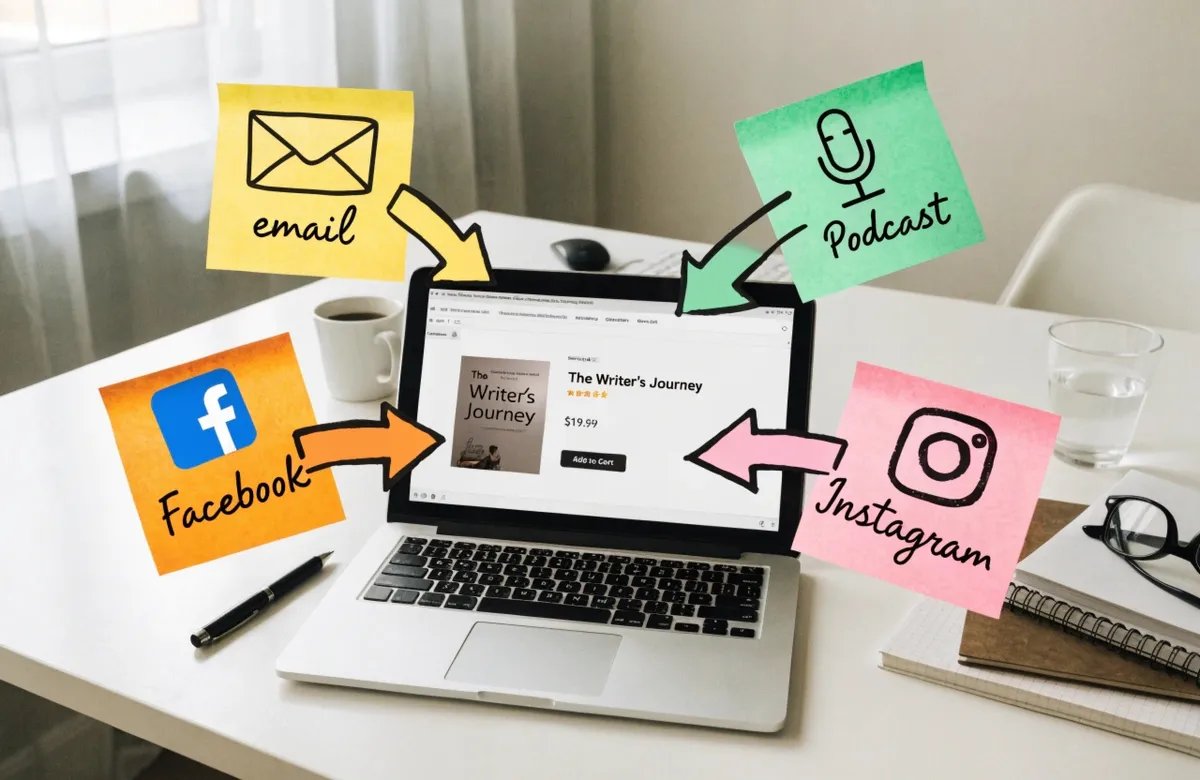
For authors, this means your newsletter, social channels, podcast appearances, and blog posts are more than “nice extras.” They are potential ranking engines—if you direct that traffic wisely.
The Principles of Algorithm‑Friendly External Traffic
To keep Amazon’s systems happy, think like a matchmaker between your warmest audience and your most relevant Amazon pages.
Strong external traffic usually has three traits:
High intent – The reader already wants mystery/thrillers like yours, or better yet, already wants your book or series.
Good pre‑framing – Your email, ad, or content sets expectations so the clicker isn’t surprised when they hit your product page.
Solid conversion – Enough of those clicks turn into buys or page reads that Amazon considers your listing a winner for those visitors.
Random, low‑quality clicks from untargeted ads or click‑farms, on the other hand, can drag down your conversion data, which undercuts the whole point.
Practical Ways Authors Can Create More (and Better) External Links
You do not need to become an e‑commerce brand to play this game well. You just need a few intentional pipelines that send the right readers to the right Amazon pages.
Here are high‑leverage options that work well for authors:
Email list funnels
Use launch sequences, reader magnets, and regular newsletters to link directly to your Amazon series page or a key book, especially during promotions or new releases.
These subscribers already know you, so their clicks tend to convert at a higher rate than cold traffic.Social content with clear next steps
Short‑form video, teasers, and behind‑the‑scenes posts on platforms like Facebook, Instagram, or TikTok can warm up curiosity before you drop a clean link to Amazon.
The goal is to make the click feel like the natural next step in a story, not a random “Buy my book” interruption.Content and PR placements
Guest posts, podcast interviews, and features on genre‑relevant blogs give you room to talk about your books in context, then point readers to your Amazon pages.
These links often bring in highly motivated readers who are already primed to purchase.
If you’re running paid ads off‑platform (Meta, Google, etc.), use precise targeting and compelling hooks so you’re bringing in readers who actually want what you offer—not just cheap clicks.
Bridge Pages, Tracking, and Bonuses: How the Tech Layer Works
Many advanced sellers use “bridge pages” and Amazon tools to squeeze more value out of every external click. Authors can borrow the same playbook.
Bridge pages
A simple landing page between your ad/email and Amazon lets you introduce the book, offer a sample, or highlight reviews. That extra context often improves conversion once the reader reaches Amazon.Amazon Attribution and Brand Referral Bonus
If you’re operating through a brand account with Brand Registry, you can generate Attribution‑tagged links that tell Amazon exactly which off‑platform campaigns brought sales.
When those tagged visitors buy within the attribution window (commonly up to 14 days), Amazon credits you a Brand Referral Bonus that can offset referral fees, effectively lowering your cost of selling.
Even if you’re not using Brand Referral yet, basic tracking (UTMs, link shorteners, or simple per‑channel URLs) lets you see which external sources are actually moving the needle, so you can double down on what works.[
Mistakes That Hurt More Than Help
Because external traffic is powerful, it’s also easy to accidentally sabotage yourself.
Avoid:
Buying junk traffic
Any scheme that sells “cheap clicks” or “guaranteed external traffic” without targeting is almost always bad data waiting to happen.Chasing volume over fit
Ten highly targeted clicks from your email list can help more than 1,000 random impressions from a poorly targeted ad set.Over‑reliance on one channel
Algorithms change. Accounts get throttled. You want a mix—email plus one or two social/content channels—feeding Amazon over time.
Think of external links as part of a broader ecosystem. When your newsletter, social content, and occasional PR all point back to a few strategic Amazon pages, you create a steady river of high‑intent traffic the algorithm can learn to love.
Call to Action
Pick just two external channels you already have—most likely your email list and one social platform—and design a simple funnel:
One piece of content that warms readers up.
One clear link to your main Amazon series or flagship book.
A way to track those clicks, even if it’s just unique URLs per channel.
Run that for your next launch or promo period, watch how it impacts your reviews and rank, and refine from there. You don’t need to out‑spend other authors; you need to out‑signal them with better traffic.

What Our Readers Are Saying!

A.Y. Berthiaume- Award Winning Author of Do Not Write That Book- Until You Read This One

“The Perfect Reader Playbook is as funny as it is useful—authors will find themselves laughing out loud as they work through the prompts while doing the serious work of building their platform.”

Tyler R. Tichelaar, PhD and award-winning author of The Mysteries of Marquette
“The Perfect Reader Playbook by Juliet Clark and Gary MacDermid is a game-changer for authors. Packed with fresh, practical strategies, it shows you exactly how to attract and energize your ideal readers—and turn them into loyal champions for your books. Smart, fun, and unbelievably effective.”

Lin Yuan-Su, Founder of Enlightened Success Institute Multiple Seven-Figure Mindset Trainer and Strategist
"The Perfect Reader Playbook is a powerful and comprehensive tool that helped me gain a much deeper understanding of my ideal clients and their journey. With that clarity, creating aligned marketing strategies and materials became easier and more intuitive. It’s well-structured, easy to use, and incredibly insightful. Whether you're just starting out or are well-established in your business, this playbook meets you where you are and adds tremendous value at any stage"
Get In Touch
Email:[email protected]
Unleash Your Business Brilliance.
© 2026 Superbrand Publishing - All Rights Reserved, Salt Lake City, UT