See Our Latest Blogs
Education That Helps Authors Shine!
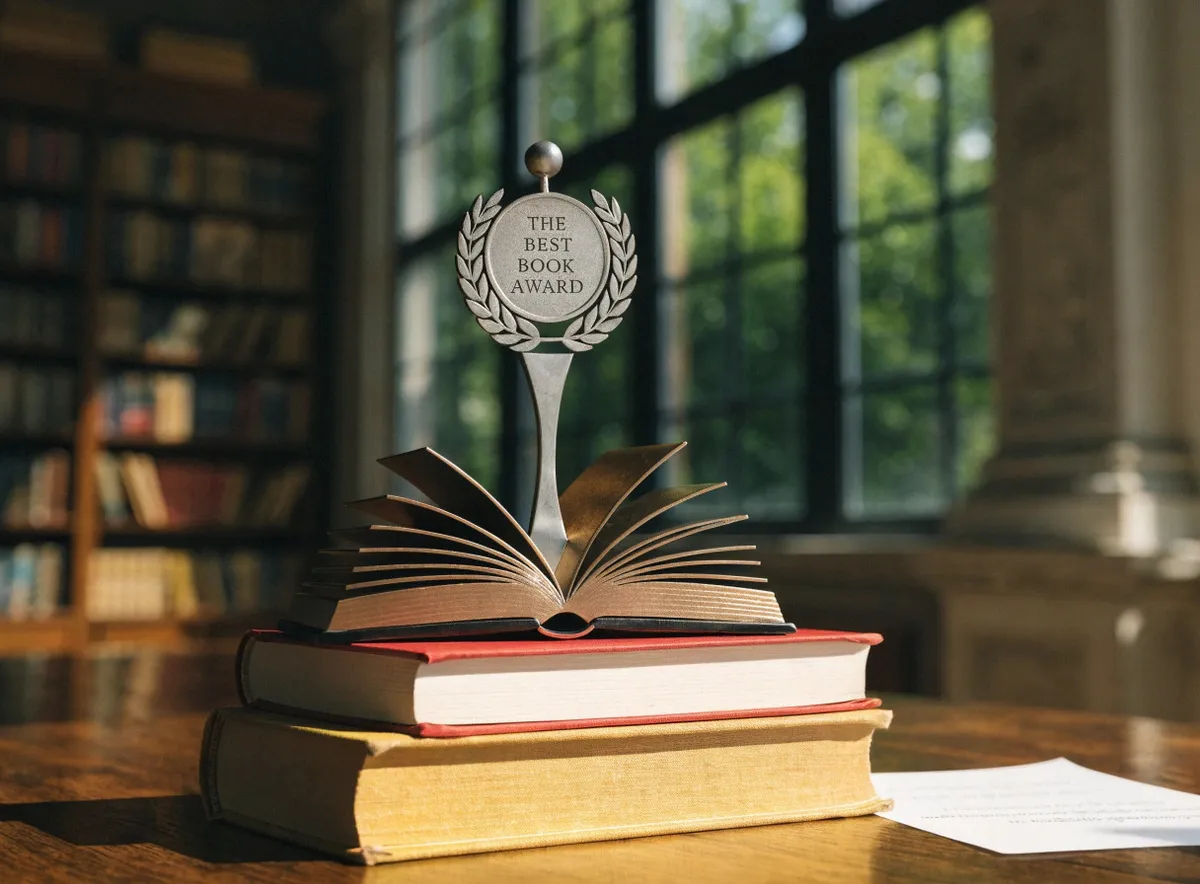
Book Awards Aren't Vanity — If You Use Them Right
There are two camps on book awards, and both of them are wrong.
The first camp thinks awards are pure ego. Pay an entry fee, get a sticker, feel important, sell nothing. The second camp thinks an award will do the selling for them, so they enter twenty programs, win something obscure, and then wonder why nothing changed.
The truth is simpler. An award is not a sales event. It is a credibility asset, and like any asset, it is worth exactly what you do with it. Most authors buy the asset and then leave it sitting in a drawer.
October is a good month to talk about this, because a lot of programs have deadlines in the fall, and the entries you make now determine what credentials you have to work with next year.
What an award actually buys you
Not sales. Let me be direct about that, because it is the expectation that ruins the whole exercise. Almost no reader has ever bought a book because it won something they had never heard of.
What an award buys is permission. Specifically:
•A cover badge that makes a stranger pause for half a second longer on your listing. That half second is worth real money at scale.
•A media hook. "Local author releases thriller" is not a story. "Local author wins national award for thriller" is a story a podcast host or reporter can actually justify covering.
•A line in your bio that does work forever. It sits in your Amazon Author Central profile, your website header, your speaker one-sheet, and your podcast pitch emails, indefinitely, for a one-time entry fee.
•Credibility for the business behind the book. If you coach, consult, or speak, an award is third-party proof that costs less than almost any other form of it.
•A reason to email your list that is not "please buy my book." Wins are the rare promotional message readers genuinely enjoy receiving.
How to tell a real program from a mill
This is where authors get burned. There are legitimate programs, and there are operations that exist to sell entry fees and stickers to anyone who pays.
Signals that a program is worth entering:
•Named judges, or at minimum a described judging process. If you cannot find out who evaluates the books, that is your answer.
•Reasonable entry fees. Most credible programs run somewhere in the range of a modest professional expense. When the fee climbs into the hundreds and every add-on costs extra, you are buying merchandise, not recognition.
•A finalist list you can look up, with real books and real authors on it, ideally including some you recognize.
•Categories that are specific but not absurd. "Mystery" is a category. "Best debut mystery set in a small town by a female author over forty" is a fee-collection scheme.
•Winners who use the credential publicly. If nobody displays this award anywhere, it carries no weight.
Red flags: guaranteed wins, unlimited categories for one fee, aggressive upsells on plaques and press releases, and no verifiable history beyond a slick website.
Pick the award that matches your promise
This is the piece almost nobody thinks about, and it matters more than the prestige of the program.
The award you lead with should match what your book claims to do. I have won in more than one place, but for my author-marketing book I lead with the Gold win for Business and Marketing, not a general festival award, because that category tells a prospective reader exactly what the book is about. The festival win is real. It is just the wrong credential for that particular promise.
For fiction, the logic runs the same way. A thriller award beats a general fiction award for a thriller, even if the general program is bigger, because genre alignment is what a browsing reader is actually evaluating.
For client submissions I use a simple rule: enter the most literal category fit as the primary entry, then consider a second entry only where the judging pool is genuinely different. Two entries in adjacent categories of the same program is usually just paying twice for one shot.
How to milk one win for a full year
Here is the part that separates vanity from strategy. You won something in November. What happens next?
•Week one: announce it to your list. Not a humble aside buried in a newsletter, an actual email with the story of the book behind it.
•Week two: update every asset. Cover badge, Amazon Author Central bio, website header, email signature, social profiles, media page, speaker one-sheet. All of it, in one sitting.
•Week three: pitch podcasts. An award is a fresh reason to reach out to shows that ignored you six months ago. The hook writes itself.
•Month two: write the story behind the book that won. Why you wrote it, what it cost you, what almost went wrong. That post is more shareable than the win itself.
•Month three: put the badge in your ad creative and test it against your control. Sometimes it lifts click-through, sometimes it does not. Now you know instead of guessing.
•Ongoing: use it as the credibility line in every guest post, every author bio, every collaboration pitch, and every sales page for the rest of your career.
One entry fee, a dozen uses. That is the return. An award nobody hears about is a receipt, not an asset.
The honest caveat
Do not build a strategy on awards alone, and do not enter everything. Two or three well-chosen entries a year, in programs that align with your genre and your promise, will outperform ten scattershot submissions every time.
And keep your claims restrained until the win is actually in hand. There is nothing that damages author credibility faster than a website advertising accolades that turn out to be participation.
Pick your programs this month, check the deadlines, and enter the two that fit. Then plan what you will do with the win before you find out whether you got it.
If you want help matching programs to your book, or figuring out how to work a credential into your platform, book a strategy session. And if the audience side is what is actually missing, start with the free Perfect Reader Playbook.
Download your free copy of the Perfect Reader Playbook @ www.Prpfree.com

What Our Readers Are Saying!

A.Y. Berthiaume- Award Winning Author of Do Not Write That Book- Until You Read This One

“The Perfect Reader Playbook is as funny as it is useful—authors will find themselves laughing out loud as they work through the prompts while doing the serious work of building their platform.”

Tyler R. Tichelaar, PhD and award-winning author of The Mysteries of Marquette
“The Perfect Reader Playbook by Juliet Clark and Gary MacDermid is a game-changer for authors. Packed with fresh, practical strategies, it shows you exactly how to attract and energize your ideal readers—and turn them into loyal champions for your books. Smart, fun, and unbelievably effective.”
Lin Yuan-Su, Founder of Enlightened Success Institute Multiple Seven-Figure Mindset Trainer and Strategist
"The Perfect Reader Playbook is a powerful and comprehensive tool that helped me gain a much deeper understanding of my ideal clients and their journey. With that clarity, creating aligned marketing strategies and materials became easier and more intuitive. It’s well-structured, easy to use, and incredibly insightful. Whether you're just starting out or are well-established in your business, this playbook meets you where you are and adds tremendous value at any stage"
Get In Touch
Email:[email protected]
Unleash Your Business Brilliance.
© 2026 Superbrand Publishing - All Rights Reserved, Salt Lake City, UT